A gentle reflection on how childhood pain can affect us, shape our lives, and ripple quietly through the years.
A Question on the Wall
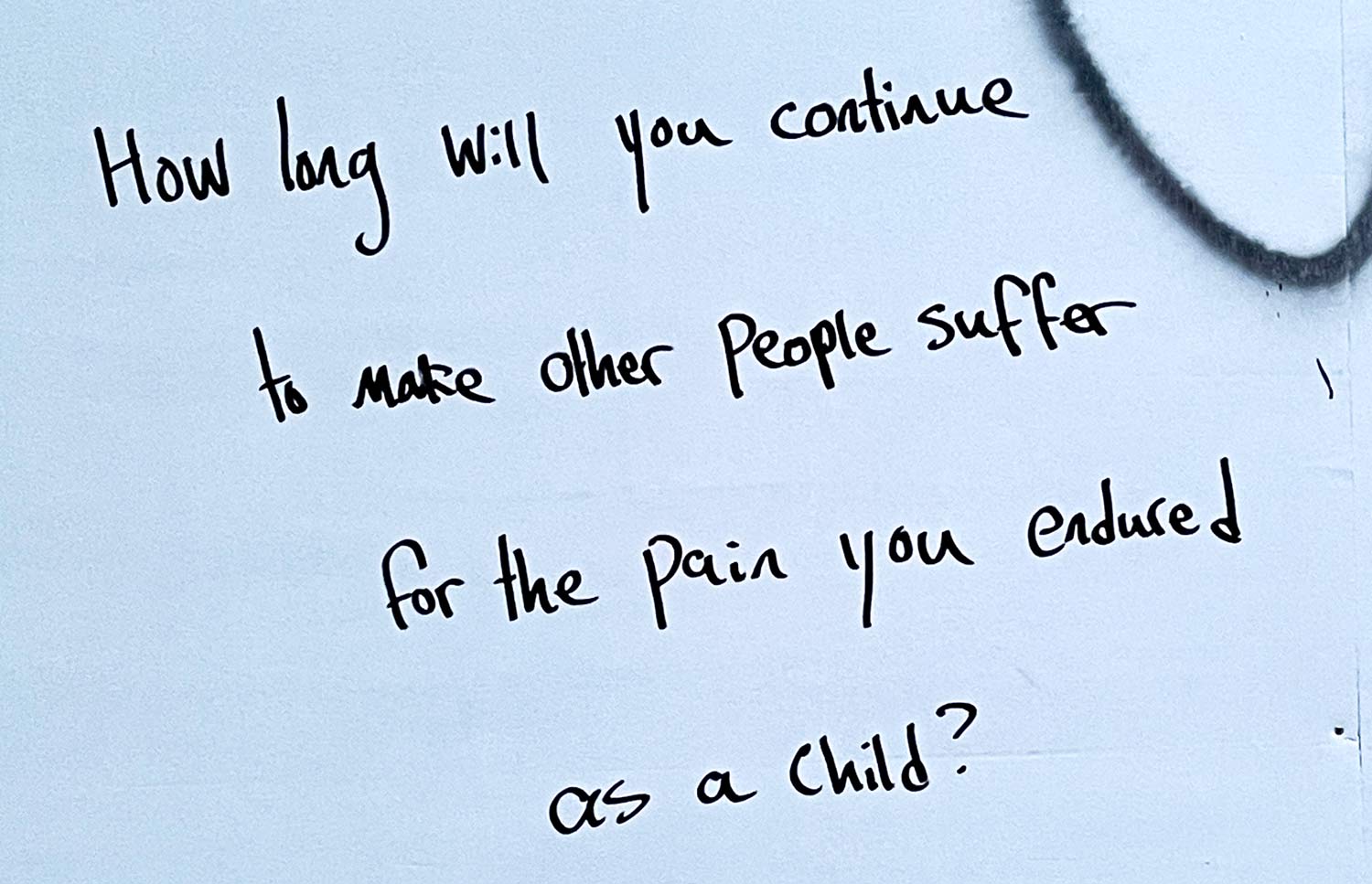
Walking through the city today, I came across another inscription—this one penned on a hoarding:
“How long will you make people suffer for the pain you endured as a child?”
This simple, profound question—its blunt honesty—holds up a mirror to the world and cuts deep into a powerful truth about the human condition: the legacy of childhood pain and its ripple effects on those around us. Beneath our adult facades, how much of our behaviour still echoes what happened before we could defend ourselves or explain where it hurt? It is a silent inheritance that can shadow friendships, families, and communities, repeating cycles we’d prefer to escape.
Echoes That Shape Us
Pain left unexamined becomes a lens through which we see others—sometimes distorting their intentions, sometimes justifying our sharp words or cold silences. It seeps into our relationships, shaping the vulnerabilities we hide, the grudges we carry, and the walls we build for protection that also keep others out.
The Possibility of Recognition
Recognising this, even awkwardly, offers a kind of freedom. It is a call to pause and perhaps untangle the knot a little. To ask, gently, whether the discomfort we feel is truly about now, or about a past we thought we’d buried.
Inherited Patterns
I’d describe myself as agnostic, but the biblical phrase ‘the sins of the father’ comes to mind—the notion that a person’s choices and wounds can ripple through generations. The way we’re conditioned shapes how we navigate the world, how we raise our children, and ultimately how they are shaped in turn. In that way, our pain doesn’t disappear; it’s carried forward, altered but still alive.
What Cannot Be Separated
Perhaps it isn’t about changing or resisting our scars, but about the natural unfolding of what is—pain, echoes, and all—simply revealing themselves without division or resistance, without need to control or fix it. The echoes of the past are woven into the fabric of who we are, neither separate from us nor something we have to overcome.
What Remains
The graffiti did its job. It stayed with me—not as a call to act or change, but as an invitation to witness the seamless flow of experience beyond effort or choice, where past and present meet without boundaries. In this witnessing, peace quietly emerges—not as something to achieve, but as the space in which all things simply are.